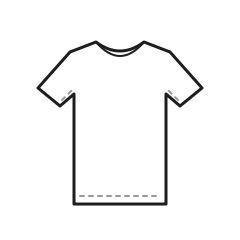
Midweight crew-neck tee
- Fabric
- Cotton jersey, roughly 160–200 gsm
- Fit
- Shoulder seam on the shoulder point, hem at the high hip
Look for: A neckband that lies flat after washing and side seams that hang straight rather than twisting.
An independent fashion journal & catalogue edit. Nothing is sold on this site.
Women’s edit
Tees with the right weight, knits that skim rather than cling, trousers that sit where they should, and layers that work across seasons.
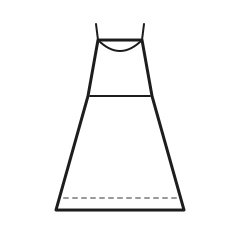
About this edit: these are garment types we think are worth knowing, with what to look for and how they should fit. They are not products for sale — there are no prices, stock or retailer links on OverClothing.com yet. Illustrations are original line drawings, not product photos.
Look for: A neckband that lies flat after washing and side seams that hang straight rather than twisting.
Look for: Enough weight to hold its square shape; opaque in white without a vest underneath.
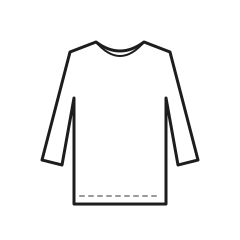
Look for: Rib that springs back when stretched, so cuffs and neckline keep their shape.
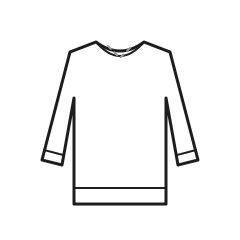
Look for: Even, tight loops on the reverse and rib trims with a little weight to them.
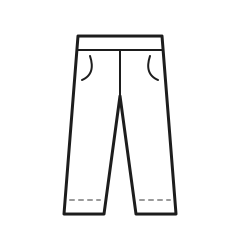
Look for: A waistband that fits without a belt and a hem with enough allowance to adjust length.
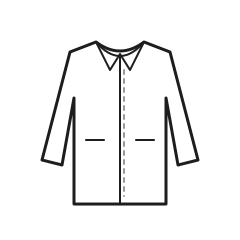
Look for: Sleeves cut with room for a sweatshirt underneath and pockets placed where hands actually go.
Look for: A fine, even knit; finer fibres are generally less prickly against skin.
Look for: Fabric heavy enough not to cling, with a neckline that stays put when you move.
Weight and fibre decide how a piece hangs and how long it lasts. A 180 gsm tee and a 240 gsm tee are different garments, even in the same cut. Start with fabric weight.
Check the shoulder seam, the hem and how the fabric behaves when you lift your arms. Our tee fit guide covers what applies to most knits.
Soft modal blends, fine merino and brushed backs are the comfort fabrics. Labels tell you more than marketing does, so learn to read them.
Shoulder seams, hem length, sleeves, necklines and cuts: how to judge a tee on the body rather than by the size on the label.
Pick a palette, choose core pieces that all work together, count real outfits and buy to fill gaps rather than repeat what you own.
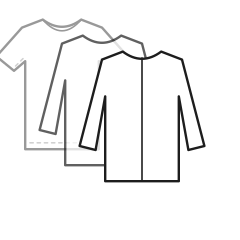
How to build base, mid and outer layers that look intentional, breathe well and adapt to cold mornings, warm trains and everything between.
Dress for long journeys in breathable, creasing-resistant layers with real pockets, then pack a small capsule you can wash on the road.
What separates loopback from fleece, why blends behave differently, and the construction details that show a sweatshirt is built to last.
Identify how a graphic was printed, then wash, dry, iron and store the tee in the way that keeps that print intact.